
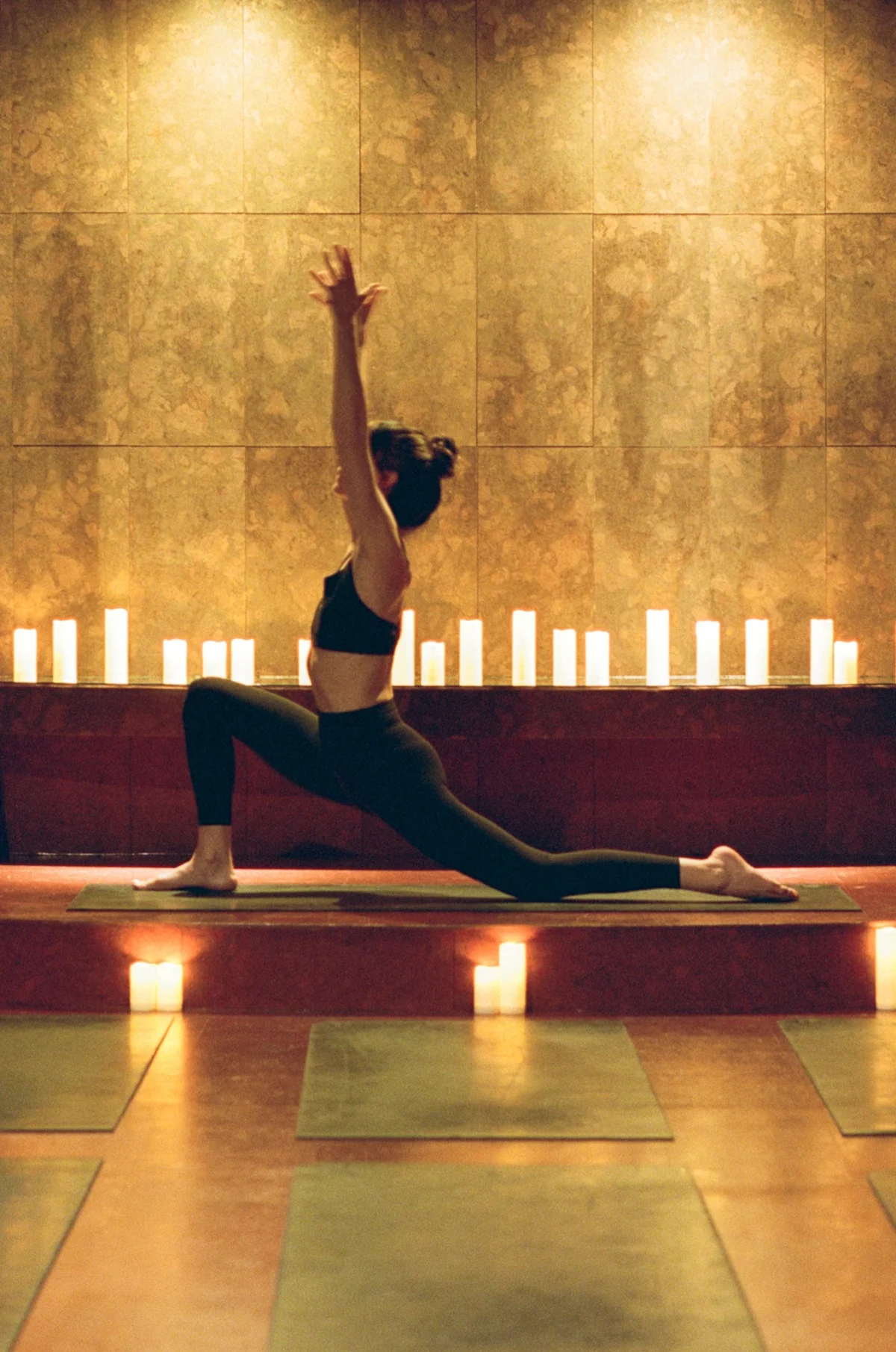
Music has always been the deepest connector for Ariel Swan, a former professional dancer who felt every rhythm pulse through her body, igniting raw presence and expression. That lifelong bond between beat and movement inspired Jaybird Studios, co-founded with Barbie Bent in Vancouver in 2019 and later expanded to Toronto. Blending Pilates-based strength, breathwork, dance, and loud, immersive music in dimly lit, mirror-free studios, Jaybird creates more than workouts; it offers a warm, womb-like escape where judgment fades, the body grounds, and presence takes over. In a chaotic world, it shows how simply letting music move you can spark the most powerful shift inward.
I want to start off talking about music. There are quite a few references to music in Jaybird and also across various things online. The copy on the website states that the workouts are “fueled by loud, immersive music to draw your awareness inward.” So I’m wondering: what are your earliest recollections of music? How do you remember it, and how do you feel connected to that feeling of music now?
⎯⎯⎯ Music is probably the thing that makes me feel the most. I was a professional dancer, and I remember that I could feel music inside me. I wanted to express it outward, sometimes in ways I didn’t even feel capable of. Music gave me this innate ability to feel pain, sadness, and sometimes frustration, depending on the song, but also such joy and connection. Bringing music into movement grounds me in my physical body, and the physical body is where I feel the safest and most at home. I feel that music is the thing that can unite people—singing together, dancing together to the same beat. It gives us rhythm. Music has existed in every culture ever, so it’s deeply rooted in humanity itself. We’re supposed to play music. We’re supposed to feel that beat. I think music really allows people to be present with what is here. That beat, that sound, gets you out of your head and into your feelings, into your heart. It can also give you that extra push when something is challenging, or, in moments when you need rest, it allows you to calm down. Music can lift you up or bring your nervous system down without you being told to do so. I don’t really think of my classes as classes. They feel like experiences—full, immersive experiences with many different elements—and the music is what leads. My family has always loved music. I’ll never forget how much my mom wanted us to dance. From my earliest memories, we were in the living room dancing with her. She loved Peter Gabriel—so much. A lot of Peter Gabriel.
When it comes to different parts of the day, how do you let music guide you? Do you start your day with music? Do you wake up and turn something on immediately? Or is music something that feels special and reserved for certain environments or moments?
⎯⎯⎯ For me, it depends. I have to separate the music I’m listening to for pleasure from the music I’m listening to for work, especially for teaching. When you’re teaching, you’re choosing very specific music, and sometimes when I’m listening, I’m curating rather than just enjoying. Honestly, if I hadn’t done Jaybird, I probably would have wanted to be a DJ. Being able to play music that people love is so much fun. But it really depends on my mood. I’m not someone who always plays music. Silence is also really important to me. When teaching is a big part of your job, and it’s so music-driven, you’re always ‘on.’ Sometimes I really need silence so I can calm myself. I definitely have ADHD, I’m sure of it, and silence helps regulate me. I love all styles of music, and it really depends on what I’m feeling. A lot of people don’t know this, but I actually started something in Vancouver called Slow Jam Sundays with three other guys. It was a throwback R&B dance party, back before R&B was being played regularly in clubs. This was about thirteen years ago, and it became a movement. If you know Vancouver nightlife, you know SJS. So music has always been about bringing people together for me. And honestly, if I had more time, I still think I’d want to be a DJ. I might just be a little old now.
I love what you’re saying about building community through music, and I want to come back to that. But I did want to ask about dance. Were you trained professionally? Did dance come from that love and joy of music, that impulse to move? Where does dance fit into all of this?
⎯⎯⎯ Yes. I was a professional dancer until I was thirty. It was something I really loved. Part of it was the music, and part of it was expression. Dance is taking something and expressing it through the body. There’s also an element of acting, play, and performance. Ever since I was a little kid, I was a performer. I loved being on stage and giving all of myself to something. When you’re on stage, you’re in a flow state. For me, music and movement are flow states, and some of the best moments of my life have happened there. I wanted to bring dance into Jaybird because a lot of current science shows that one of the most effective tools for depression and anxiety is dance. Dancing raises vibration. It can change what’s happening in the brain and help shift certain states. That doesn’t mean dancing cures everything, but it can be a very powerful tool. When we first opened Jaybird, we only had one class that included Flow On Your Own, and it wasn’t a dance party. During COVID, I felt this strong need to dance—to celebrate and move. I noticed the biggest shifts in myself afterward. When we first introduced dancing, people thought we were crazy, especially right after COVID. People were like, “You want me to just start dancing?” But it gave people permission to get out of their heads and into their bodies, even for two minutes, without being told how to look, how to move, or how to feel. It didn’t need to look good. It just needed to feel good. Dancing also made people uncomfortable, and that discomfort was important. People didn’t know what to do, and that was the point. Many people came to Jaybird thinking it was just a Pilates studio, even though we always say we’re a movement studio. Then suddenly they’re meditating and dancing. Some people initially hated it. They’d write feedback saying the dancing was a waste. Then they’d keep coming. Eventually, once they allowed themselves to move and feel joy—or whatever came up—it became their favourite part. People come back and tell me they craved it, that it made them feel alive and embodied. For me, because I don’t dance on stage anymore, those two minutes in the studio matter so much. Dance still brings me the most joy, and I wanted to share that. I wanted people to understand that it’s not about how you look—it’s about how you feel.
How did your love of music and the knowledge that dance is so important and integral to good health come together with fitness?
⎯⎯⎯ Because of dance, I had a really bad back injury, and my back injury led me to Pilates. That’s kind of how I started teaching Pilates, because I realized that it actually gave me an extra five years in my dance career. Ten years ago, Barbie Bent opened Lagree West, and I was one of her founding teachers. She's also my co-founder and an absolutely amazing businesswoman. I feel like the beauty of Jaybird is that there are two people who are very good at what they do. She’s amazing at the business aspect of it, and I came from the creative side and the product side—creating these classes and experiences. What was so beautiful is that we both really, really believed in mindfulness. What we felt was missing in the fitness world was a place with less judgment and comparison. That’s why we chose to turn the lights down and take the mirrors away. We felt this was a time for people not to compare themselves to the person next to them, and instead be able to come back home to their body. The dream for Jaybird is this intersection of movement, or fitness, and mindfulness together. At the time, it was a very new concept to blend these ideas, especially on the Pilates side. Obviously, with yoga, there’s a lot of mindfulness, but when you look at Pilates, there wasn’t much mindfulness built in. And sometimes with yoga, people felt it didn’t align with them. So we decided with Jaybird that we wanted to base a lot of things in neuroscience. We also wanted to approach mindfulness in a very accessible way—just getting people curious. What do you feel? What’s here? It doesn’t need to be a deep meditation. It’s simply coming back to the body and allowing yourself to be more present. I always say our mind can exist in the future and the past, but your body lives in the present moment only. So when you get into your body, you start to really live. Life happens right here. But we can miss the moment because we’re constantly elsewhere. We wanted to create a space where people got curious about mindfulness, and also a space that felt like a womb. The outside world is very chaotic. We have so much going on—our cell phones, our families, our jobs, Toronto traffic. But when you go into that space, we take away the electronics, we turn down the lights, and we create a place where you feel warm and comforted. The music is surround sound, so it feels like you’re taking yourself out of your everyday life and being transported into a different space. We also tried to do that with the design of the studios. When you walk in, you feel like you’ve entered a different place. You can leave the outside world behind and have that hour of self-care just for you.
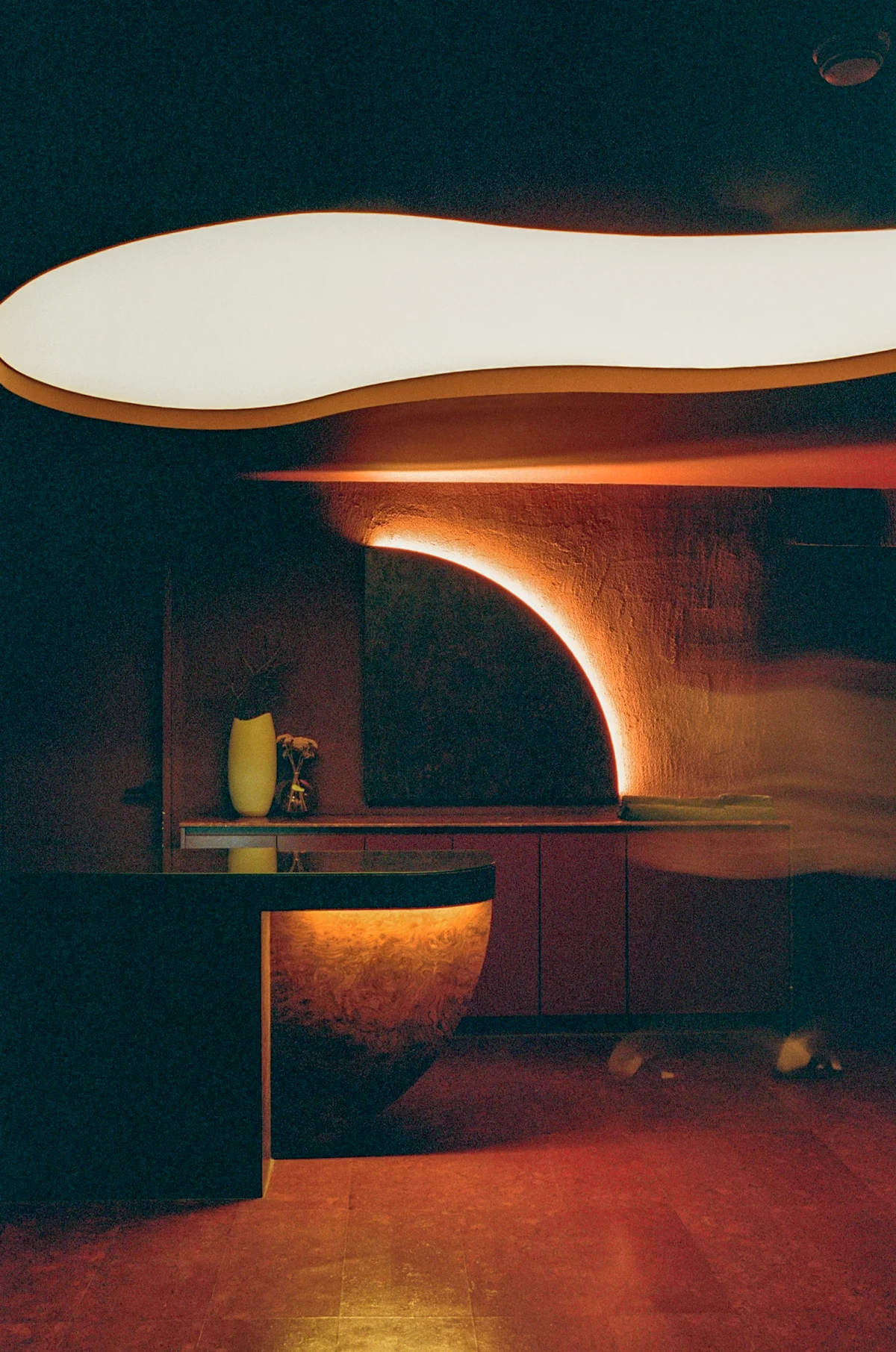
I want to talk about the design. You’ve already talked a bit about turning down the lights and removing the mirrors. Can you talk a little about the learnings you had while developing the environmental and atmospheric concepts? And where did that come from? Did you have a design team or work with an agency?
⎯⎯⎯ Barbie and I made a very clear decision when we opened our first Jaybird in Vancouver in 2019. We knew that if we were coming into this market, we wanted to come in really elevated. We wanted something that would be hard to copy and that wouldn’t feel like a yoga or Pilates studio. We wanted you to walk in and not even know what you were walking into. So we decided to invest in design. We hired Ste. Marie Studio, one of the top design firms in Canada. They had never done a studio before, and they designed our first one. Would I have thought I’d own a brown studio for my first location? No. But they knew exactly what they were doing, and the studio is absolutely beautiful. For our later studios, we worked with Ali McQuaid from Future Studio in Toronto. She designed our Yorkville and Kingsway locations, and she’s currently designing Midtown and, hopefully, New York. Every Jaybird is different. We’ve gone with an Aesop-like feel where you don’t know what you’re going to get. Each location has a colour story. Brown for the first studio, green for Queen West, burgundy-red for Yorkville, blue for Kingsway. Each one has a different emotional tone—blue feels like the night sky, Yorkville feels desert-like, Queen West feels forested, and brown feels grounded and energized. At the end of the day, it’s about elevated design that doesn’t look like anything else. We’ve learned a lot—lighting changes everything, studio flow, soundproofing, prop storage, water stations. Each studio gets better. It would be easier to cookie-cutter everything, but part of Jaybird’s beauty is that each location has its own feeling. Barbie and I are very creative, and this is a way for us to create something that inspires amazement. We want people to walk in and feel that.
Coming back to community—once the idea and space exist, how do you build community so people understand it’s not just a workout but an escape?
⎯⎯⎯ I’ll be honest—when we opened, I was terrified. I was well-known in Vancouver, so I knew people would try it, but I didn’t know if it would work. Once it did, the biggest risk was Toronto. That’s how we knew if this could scale. It was scary, but by the time we arrived, there was already a buzz. Community comes from teachers, training, and consistency. Jaybird is about connection to self, not high-fives. You feel the energy, even while inward. It’s not for everyone, and that’s okay. Because the people it is for really connect. Toronto has been incredible to us, and we’re very grateful. We see ourselves as a hospitality brand as much as a fitness brand. Guest experience matters—from remembering names to policies like no phones and no late entry. Those rules protect the experience. And while not everyone loves them, great customer service can always turn things around.
I thought what you said about standing your ground was really important. Not trying to be everything for everyone.
⎯⎯⎯ Exactly. That’s what builds real community.
Finally, I wanted to talk about embodiment day-to-day.
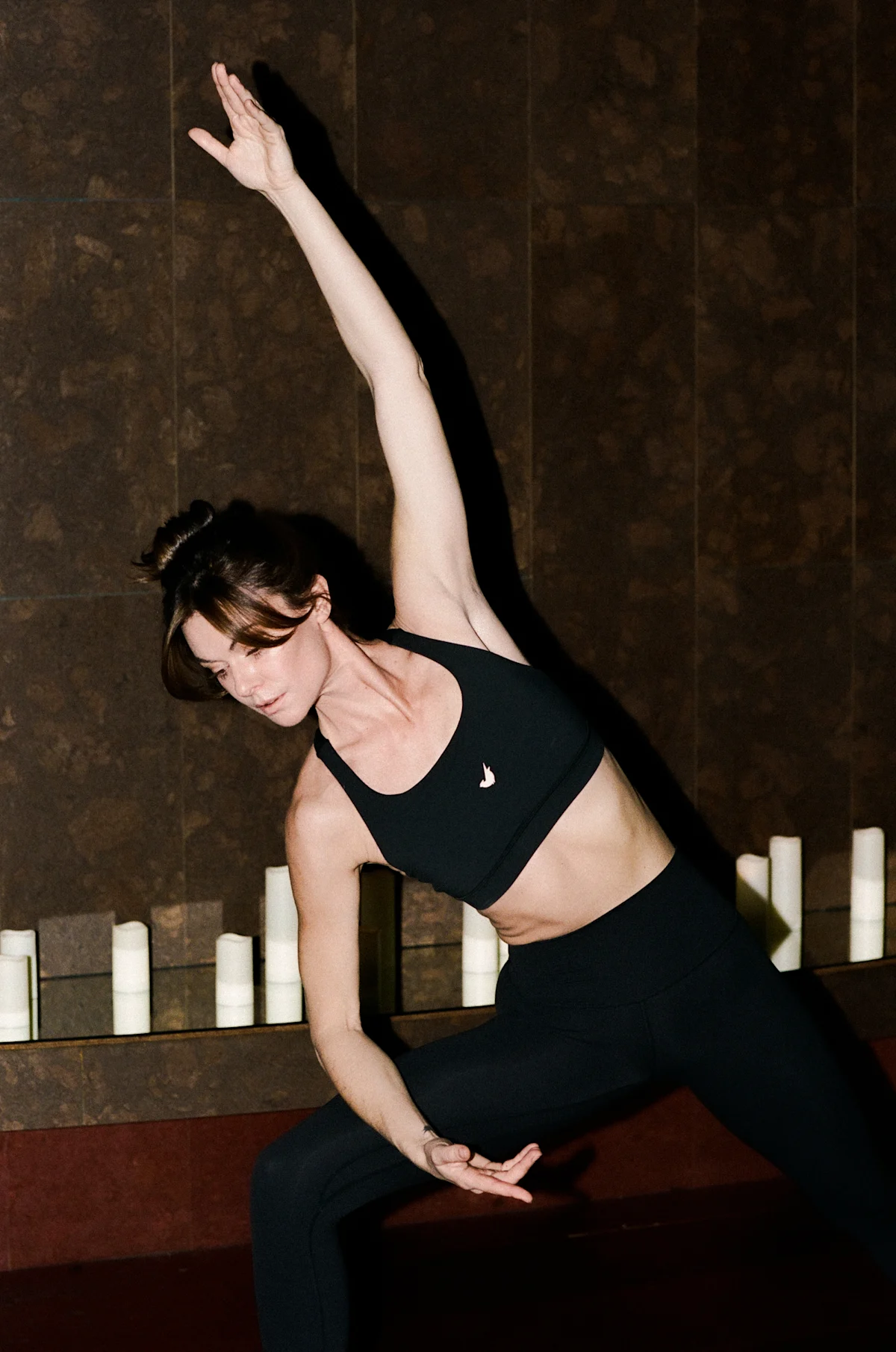
⎯⎯⎯ Breath is the number one tool. Your breath tells you everything about your nervous system. Sometimes it’s as simple as feeling your feet on the ground and taking a few longer exhales. If I’m anxious, I’ll put on a song and shake it out. Literally shake it off. Then ground again. These little moments help us stay present. I love sleep. I’m not a 5:30 a.m. journaling person. But when I wake up, I take a few breaths before grabbing my phone. Same at night—acknowledging the day, finding gratitude, and closing with presence.
What's next for Jaybird?
⎯⎯⎯ We've just signed a lease in NYC and will be entering the U.S. market in the fall, so more to come on that!
– East Room is a shared workspace company providing design-forward office solutions, authentic programming and a diverse community to established companies and enterprising freelancers. We explore art, design, music, and entrepreneurship. Visit our News & Stories page to read more.

