
Kate Clarke and Noura Mutairi have a sixth sense for connecting the right people to the right brands, such as casting Danny Trejo in a Kotn campaign called Tough Guys, Soft Sweaters. Since launching BYNK together in 2020—By Kate and Noura, get it?—they've been making content you actually share with your friends, and throwing parties you actually want to be at. Kate and Noura have built a robust, growing business that's going global. It can be hard to tell how well independent creative companies are doing behind the scenes. The agency's Queen West office and studio houses about 32 employees and has made major inroads in the US, the UK, and Europe. Now, they're bringing BYNK to Dubai.
Tell me about when and why you started BYNK. What’s the story?
⎯⎯⎯ Kate Clarke: It kind of fell into our laps, to some extent. Noura and I met working for a startup—she was the first hire, and I was the second—so we were both wearing every hat. My side was more content, social, graphic design, and creative; Noura handled influencer, events, and operations. We got to do a lot of the external-facing work together.
We loved working together. It took us a minute to realize we were actually friends—that’s still a joke between us—but we worked together long enough to really understand each other’s style. Creatively, we had the same vision, and that eventually led us into freelancing together.
I had left the company by then, and Noura was still there, but we were freelancing on the side on smaller projects. COVID is really what pushed us into it. It was a blessing in disguise in the sense that there wasn’t much to do except work. We started freelancing more seriously, and then Noura moved into my house.
Noura Mutairi: I’d moved back in with my family, as so many of us did during COVID, and then I had to put together a whole PowerPoint for my dad explaining that I was going to move in with Kate, start this business, and absolutely not get COVID. Then I moved in with Kate and immediately got COVID that week.
KC: She’s the problem. I never got it. That was really the moment we got serious about BYNK—we put a name on it, made socials, built a deck. It was the worst deck we’ve ever seen. We made ourselves into cartoons. Looking back, it was very comic-book style and deeply embarrassing.
NM: But when people say don’t wait until it’s perfect, we really didn’t. We got it out there and figured it out as we went.
KC: It was a learning curve, for sure. She moved in around May, we officially started in June, and by September, we’d brought on our first team member, Beth, part-time. That was when the two of us decided to leave our full-time jobs and do this properly.
KC: In that first year, we grew to five people. It was so exciting to see other people become invested in what we were building. And because it was COVID, we could compete with agencies that looked much bigger than us. We were two girls on a couch, but everyone else was remote too, so the work had to speak for itself—and thankfully, it did.
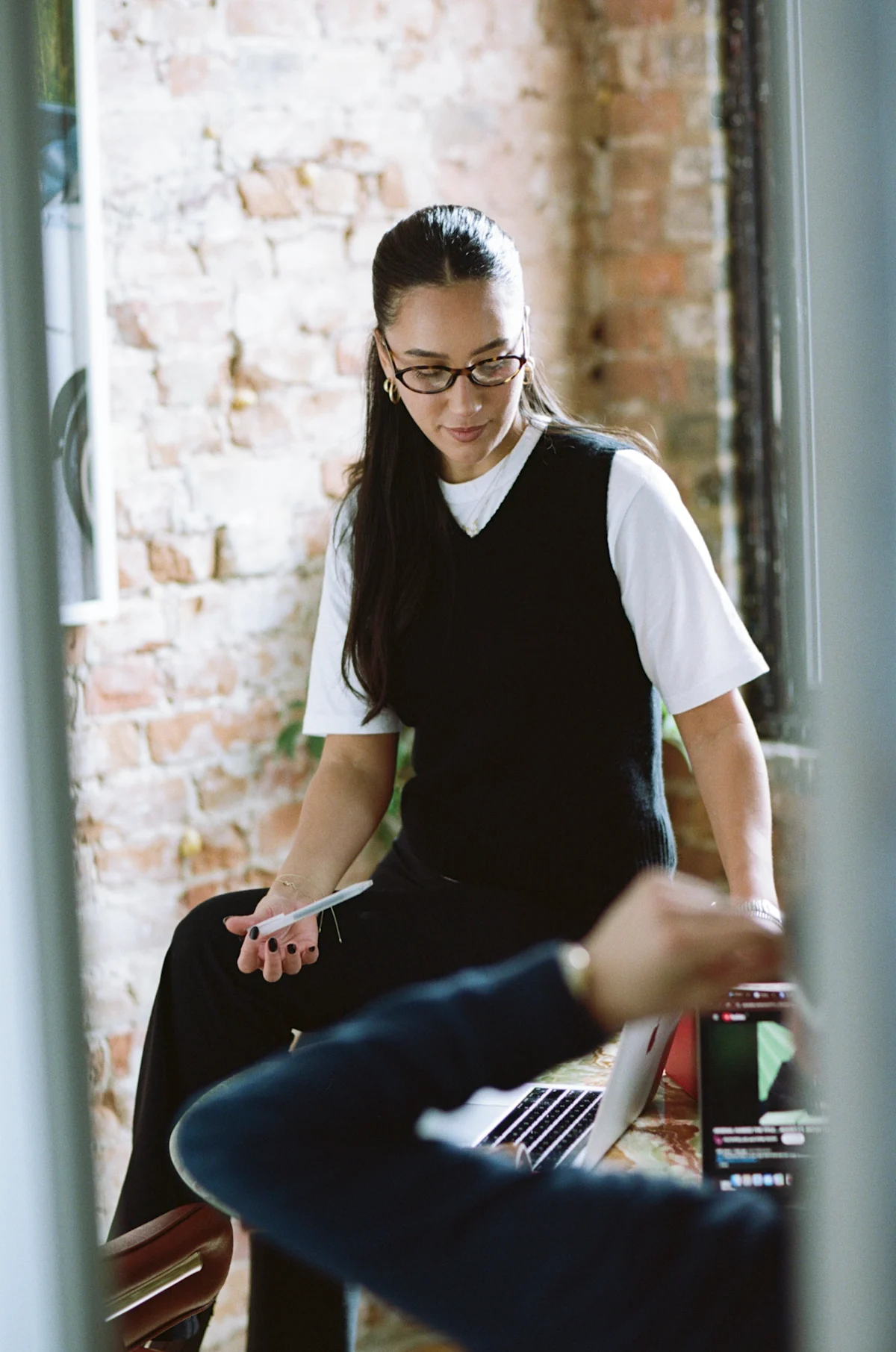
What was the fire in your belly? What made you want to go out on your own?
⎯⎯⎯ KC: For me, it was about having a voice that was actually heard, and doing work I could be proud of. After the startup, I went to a more established company. On paper, it looked like a dream job—big brands, big opportunities—but my job was boring. I had no say in anything. I felt like I couldn’t contribute in any meaningful way. At the startup, and later in freelancing, people wanted to hear our ideas—but they also challenged us to back them up. I think that kind of stubbornness is important in a creative business: not being inflexible, but being willing to say, I believe in this, here’s why, now let’s make it better.
What’s been so exciting about BYNK is that we’re not stuck in one niche. We get to work across fashion, beauty, lifestyle, and beyond. We get to chase different ideas, and we get to create that same opportunity for the team around us. Five years ago, that didn’t feel nearly as accessible in Toronto. Now it feels like there’s this whole community of people building their own thing, and we get to collaborate with them. That’s really special.
You grew fast. What did those early months teach you?
⎯⎯⎯ NM: We started strong—almost too strong. In the first few months, we closed a ton of business and thought, okay, this is it. Then the next month, we lost it all. It was up, then straight down. Those early months taught us a lot.
The biggest lesson was that a business has to be built step by step. During COVID, we fell into that freelance mindset where you control everything, but it became incredibly unhealthy. It was probably the unhealthiest I’ve ever been. We’d wake up, open our laptops, work all day until bed, close the laptops, go to sleep, and repeat. We were burnt out and had no infrastructure. So the early years came with a lot of expensive lessons about sustainability.
One of those lessons was boundaries. We had a client who really pulled on my heartstrings, and month after month, they weren’t paying their retainer. I kept believing we should give them more time. In the end, they disappeared owing us four months of a retainer—enough, at our size then, that it could have closed our doors.
I remember calling friends, my dad, and mentors, asking what to do. And they all basically said: close your books. This is your tuition. This is the fee you paid to learn the lesson. That really stayed with me. Anytime something goes badly now, I think of it as tuition.
KC: That experience really clarified how important boundaries are, especially because so much of this business is built on relationships. A lot of our work comes from referrals—other agencies, other brands, creators we’ve crossed paths with. So there’s a fine line between protecting yourself and protecting the relationship. Knowing when to stand your ground is one of the hardest parts of the job.
It helps that the two of us can switch roles. Sometimes one of us is the tougher voice, and the other keeps the relationship warm. It depends on the situation.
What are you most proud of so far?
⎯⎯⎯ NM: The first thing that comes to mind is the culture we built. We always knew where we wanted to go, but we also knew what we didn’t want. From earlier experiences, we knew creatives needed to be nurtured. You can’t put someone in a toxic environment and expect revolutionary work.
From day one, a non-negotiable for us was building a place where people genuinely love to be. The proudest thing we’ll ever do is create an environment people speak highly of because they mean it, not because it’s performative.
The most infectious thing is when you build something in your head, and then it grows beyond you. It’s not just about me and Kate anymore. It belongs to the people who have walked through BYNK, who’ve shaped the work, who’ve contributed to the culture. That’s what I’m proudest of.
KC: It shows up in everything. Our team genuinely likes being together. Whether it’s a trip, a campaign, or an event, we’re excited to do it together. That balance was really important to us: building something that feels like community, without losing professionalism or boundaries. Preserving that magic while also letting the company evolve was always the goal.
What’s it like building a business with your friend?
⎯⎯⎯ NM: We always joke that we’re married. We’re friends, partners, practically family. And like any relationship, you have to keep showing up for it. What makes it easier is the level of respect. When you look across the table and genuinely think, I trust you, I respect you, you’re incredibly talented, it makes conflict easier to navigate.
KC: And the best part is that you have someone for both the highs and the lows. If there’s a dream project, a new client, or an amazing trip, you get to experience that together. If something goes badly, you have someone who gets it immediately.
What really helped us is that we weren’t friends first—we met through work. So our first impression of each other was professional. We already understood how the other person worked, which matters a lot. You can have the same vision, but if your execution styles clash, it’s hard.
NM: Our work styles are also opposite in a very complementary way. Kate loves being on a flight, on set, travelling, in motion. I’m much more of a homebody. So when something comes up, it’s usually obvious who should take the lead. We don’t compete. We complement each other. That’s a huge part of why it works.
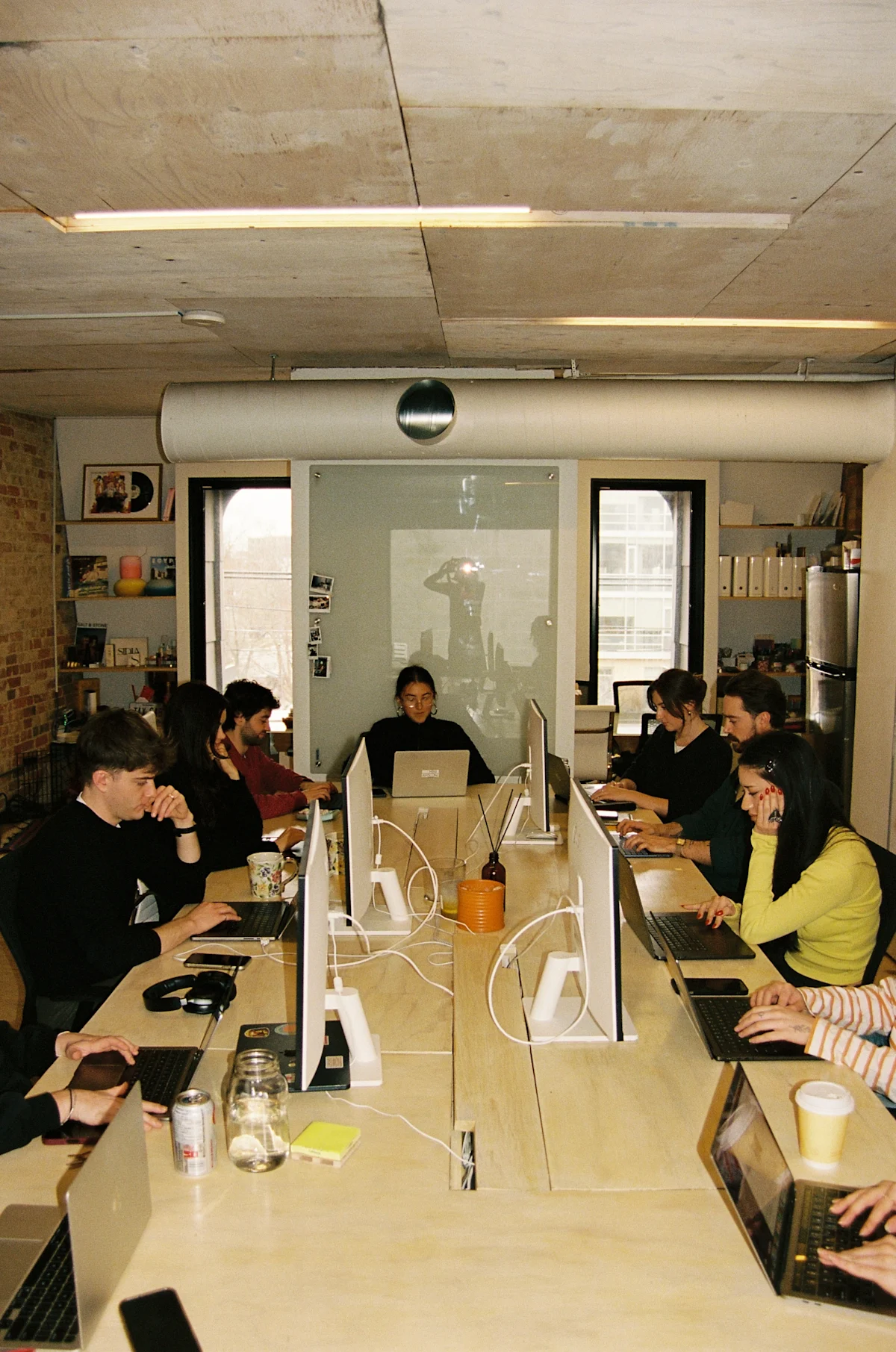
Have you ever felt like you had to prove yourselves, because you’re two women?
⎯⎯⎯ KC: In one of my earlier corporate roles, it was older men running fashion companies that were marketing to women, and there still weren’t many women represented in leadership. So yes, we’ve seen that energy.
What’s been lucky for us is that BYNK has created a different kind of environment. We work with so many female founders and female-led companies, and it’s important to us that women are present on sets, at events, and throughout the process.
But of course, there are still people who look at younger women in business and underestimate them. I remember someone senior in the industry referring to the startup we came from—which had been founded by two women—as “ankle-biters trying to get a piece of the pie.” That kind of comment drove me insane, because it was completely dismissive and completely wrong.
NM: If anything, age felt like the bigger factor for us. When we started, I was 25, and Kate was 23. So there was definitely a sense that if we were going to do this, we had to be the most professional people in the room and produce work that stopped people in their tracks. We weren’t going to wait ten years to earn a seat at the table. We were going to earn it now.
What’s next for BYNK? Tell me about Dubai.
⎯⎯⎯ NM: I grew up in Amman, Jordan, so this next chapter feels personal as well as strategic. The Dubai and GCC [Gulf Cooperating Council, an alliance of six Arab states including Saudi Arabia, UAE, Qatar, Kuwait, Oman, Bahrain] market is exploding. Brands from all over the world are paying attention to it, and there’s incredible talent and opportunity there.
We’ve built a strong base and blueprint in North America, and we already work across North America and the UK, so GCC feels like both a homecoming and the next big step. There’s a lot more to come.
KC: What’s been really striking over the past few years is just how small the world is. We’ve done so much across North America, and then more in the UK and Europe, and now increasingly in the Middle East. You start to see the overlap—shared communities, shared collaborators, shared opportunities.
What excites us is the chance to bridge those worlds: to take the network, creative approach, and experience we’ve built here, and connect our clients to that market through a team that understands both sides of it. That feels like a really exciting place for BYNK to grow.
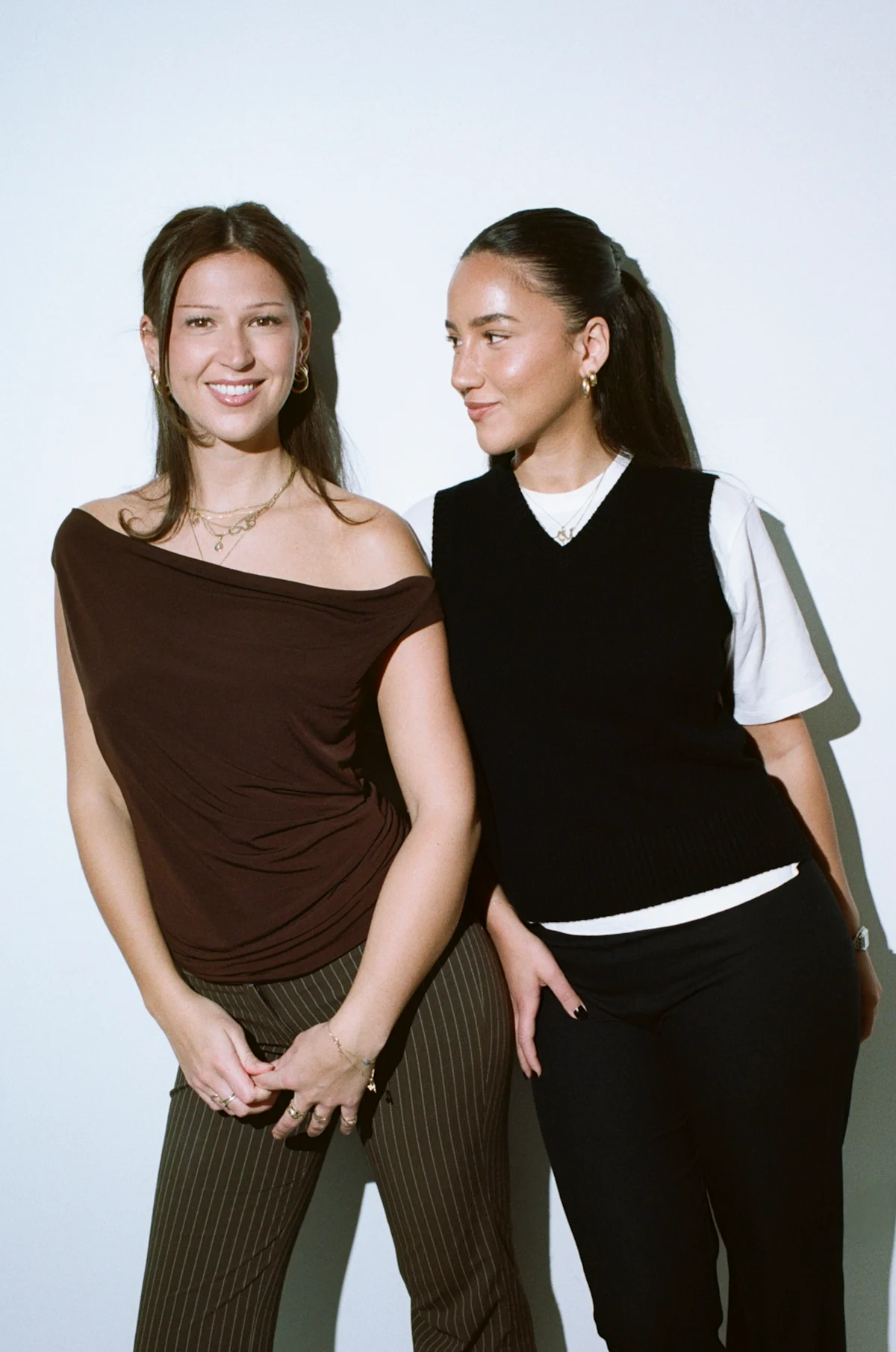
If you had to explain to your parents what you do in one sentence, what would you say?
⎯⎯⎯ KC: This is the hardest question ever. My mom has helped us with bookkeeping since the beginning, and for the longest time, I don’t think she had a clue how to explain what we did. She literally had an album on her phone full of screenshots of our work so she could just show people instead.
NM: I would say we create content, throw parties, and connect cool people to brands.
KC: But we’re legit.
NM: Parents, we’re legit.
– East Room is a shared workspace company providing design-forward office solutions, authentic programming and a diverse community to established companies and enterprising freelancers. We explore art, design, music, and entrepreneurship. Visit our News & Stories page to read more.

