
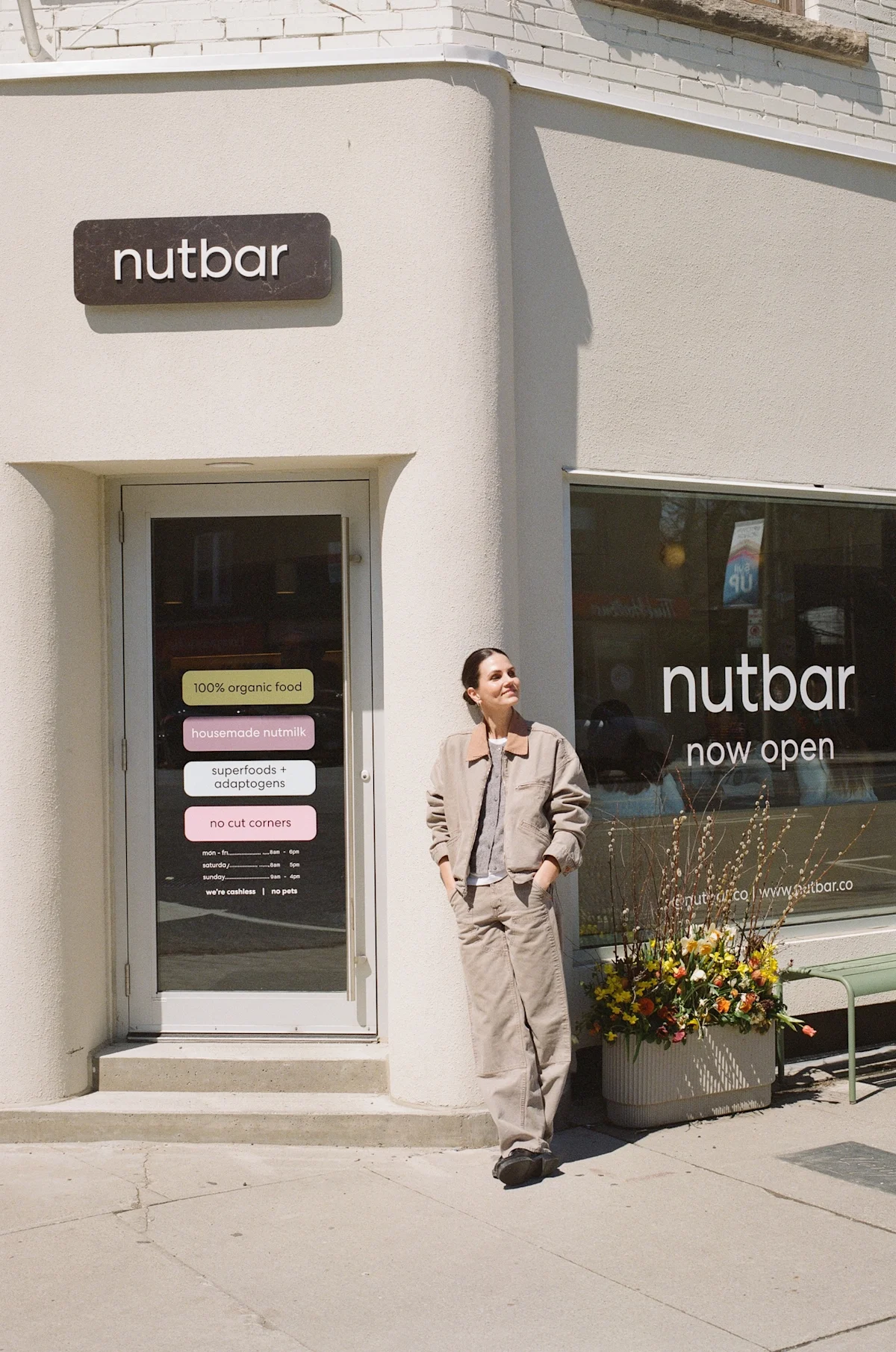
If you were drinking ceremonial-grade matcha in 2016, you probably got it from nutbar, the Toronto superfood café founded by Kate Taylor Martin. After working in a hospital inspired her to pursue holistic nutrition, Martin began developing superfood recipes that would help her feel her best. Martin never set out to be an entrepreneur, but she knew she wanted to share her recipes with other health-conscious people, and the concept for nutbar was born. Now with six locations, Martin is growing an empire built on nutmilk.
What’s the story behind nutbar?
⎯⎯⎯ When I was 10, I asked my mom for a cash register for my birthday—in 1995, cash registers were like an iPad. I put it in my bedroom and put a price tag on everything in my room. I would make my siblings shop the room, I would check them out, and I'd have my little receipt book. I remember, even from such a young age, being so excited about the idea of creating a community store, a place where people would come one day and revisit.
Did you always want to start your own business?
⎯⎯⎯ I went to school for English and psychology; I never took a business class. I started working at St. Mike's Hospital, and I can really pinpoint that as a turning point in the trajectory of my career. Something just hit so hard about being in a hospital every single day and thinking of how many people don't feel good. If you look at the average coffee shop on most of our street corners across our country, every morning, people are lined up getting donuts, bagels, croissants, muffins, scones, and that's what makes up a lot of their daily fuel. I was like, I need to take accountability for my own health.
Where did you channel this newfound interest in health?
⎯⎯⎯ I enrolled in the Institute of Holistic Nutrition to learn about a holistic lifestyle. I wanted to know how I could take the best care of myself. At school, I had the same feeling that I did when I was 10 with that cash register of like, this is exciting. It gave me a feeling of purpose and passion. Slowly, I started to dream up the idea of this healthy coffee shop concept. I also started doing research about superfoods and slowly started tinkering with recipes at home for making little bites at home: smoothies and tonics. I did hundreds of focus groups where I would get people to try items and rate them on a scale from one to 10, and ask: How much would you pay for this? Do you know what a chia seed is? Do you know what matcha is? I collected the data and realized people were eating this food and saying, ‘This is delicious, I feel amazing, but there's nowhere for me to get this, and I'm definitely not making it myself.’
What was the initial concept?
⎯⎯⎯ I didn't want to open a full-scale restaurant. I loved the idea of the frequency and behaviour patterns of a coffee shop — something like 85% of Canadians get their coffee or tea outside the home every day — I thought, what if I could tap into this market and create a new experience? So instead of getting your coffee with cream and sugar and a donut in the morning, what if you could get a matcha with house-made nut milk and some medicinal mushrooms in it, and a really nourishing super food bite, that makes a difference in your day and your energy levels and your mood? So slowly, the idea for nutbar was born. I was like, if I can get even 10% of what Starbucks gets, is this a viable business? I took a huge leap of faith. I remember I had an Instagram post ready to go live to announce that we’re open, and I couldn't even press send because I was so worried. That was December 2016, and we’ve had a really positive community response from the very beginning. It's never been about starting a concept just to have a business and looking at the bottom line. This has always been about what I can put out into the world and feel good about helping to nourish people.
You have a successful in-house line of nutmilk and cult smoothies, but also a strong brand. How did you develop that identity?
⎯⎯⎯ I realized very quickly that our competitive advantage was an unwavering commitment to quality. We wanted to offer the healthiest food that you can get on the go. For us, it was never even an option to use anything but cold-pressed organic olive oil, for example. So transparency, integrity and the quality of our food sets us apart. You can't say you're a brand built on trust and quality without actually doing it. I always say that feeling good is addictive; that’s how I think of our brand.
What was the first nutbar product that really hit?
⎯⎯⎯ The vanilla smoothie felt like a game-changer when I started to get friends and family to try it. I remember trying it and being like, this is the best smoothie I've ever had in my life. It’s a creamy, satisfying, delicious, craveable milkshake.
How have you seen people’s tastes change around food, health, and wellness?
⎯⎯⎯ What's amazing to me is watching the shift in young people now. At our Adelaide and Brandt location, which skews younger, on a Saturday morning nutbar is jam-packed with young people who have just woken up early, done an Othership class, and come next door for a smoothie, instead of having gone out to a bar the night before and bought a round of shots for everybody. It just feels like money is being allocated in a different way for young people, and their priorities feel slightly different from when I was growing up.
Me too.
⎯⎯⎯ Like, were people making comments when we used to go to the bar and buy God knows how many drinks and running a bar tab? That wasn't a thing people would be shocked if we spent $100 at a bar.
How did you learn about the food supply chain and sourcing ingredients? And how do you train your staff to educate consumers about that?
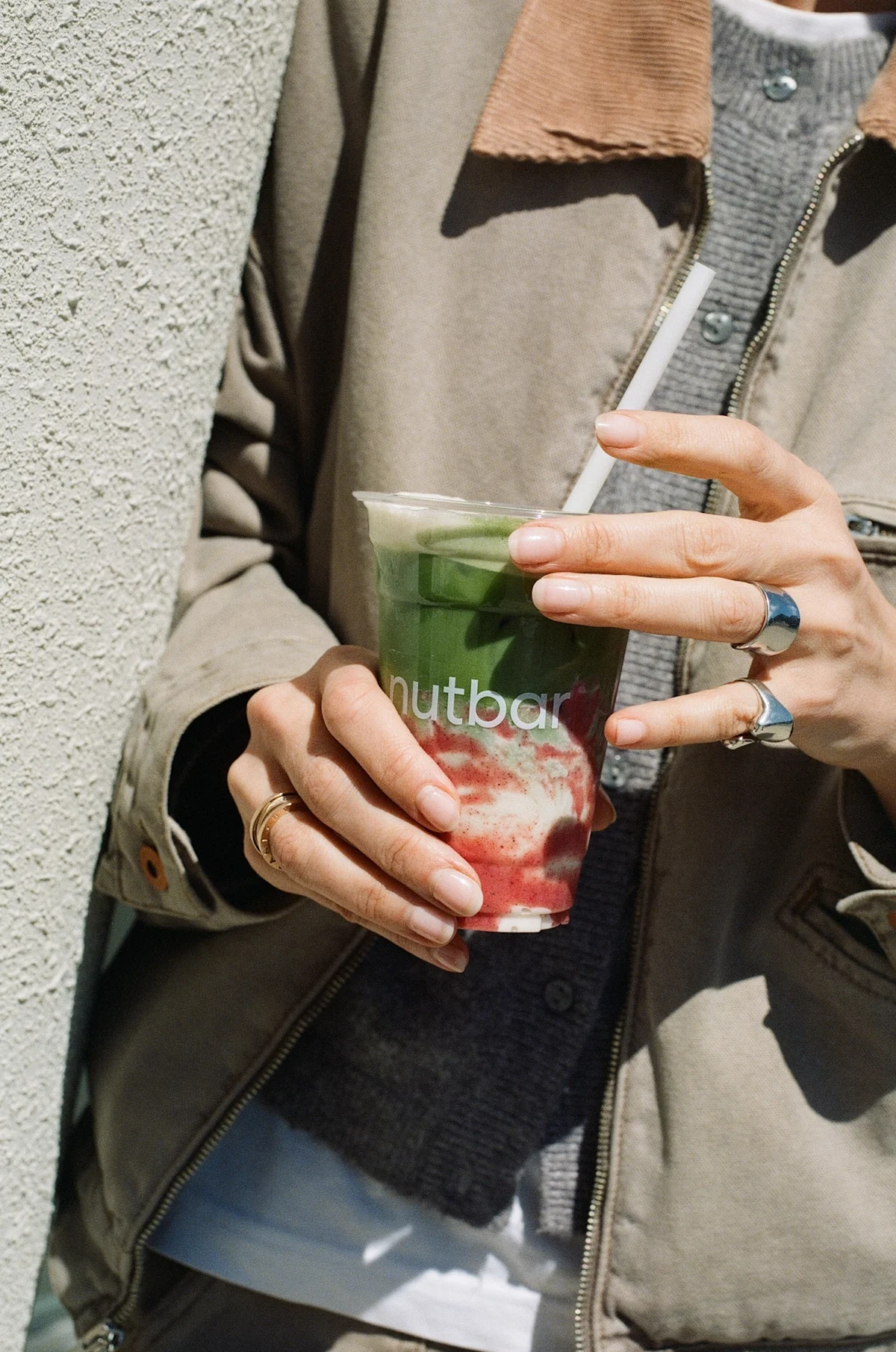
⎯⎯⎯ I became obsessed with learning about the superfoods myself. Where did these foods come from? What were their benefits? Why are they good for people? That was everything for me before I crystallized the idea for the brand. And then once I had a really good idea of the recipes, it was very practical. All of a sudden, I was like, Where am I actually getting organic chia seeds? So my most valuable hire was my first manager. The number one thing was that you had to have worked in kitchens before and know about food prep and storage. Like, what does each food look like when it goes bad? I had no idea. So thank God for her. When we first opened, I was doing all the other stuff: building community, recipes, brands, and getting the look and feel of it all right. And she was very much like, let's organize the kitchen, let's get some processes in line. Let's find suppliers. I networked with every person I could talk to in the industry to ask questions like: who's the best organic produce supplier? And so we interviewed everybody, got pricing, and started to compile. At the beginning, we did the best we could with what we had, and it worked, but it has been refined so much over the last decade that now it feels like we have an extremely solid foundation to help us grow. So we're really intentional and rigorous about how that whole system works. And then the education piece is really important to me. We want to empower people to make some of these decisions for themselves at home and to know what they're getting and why it's good for them. So, if you're saying, looking at our menu and asking, ‘What’s chaga?’ It's important to me that our front-of-house team member can say, ‘Oh, my God, let me tell you. It's sort of the king of the medicinal mushroom family, and it's responsible for vitality and energy, and it’s super high in antioxidants.’ I love the idea of giving our customers a bit of this information so that they can go home and tell a friend or give it to their loved ones. I'm obsessed with my job. It feels like the biggest privilege to do what I do. Never have Sunday scaries. I never feel drained by this.
What’s the hardest part of your job?
⎯⎯⎯ You know, somebody once gave me the advice that having a business is just being in the business of solving problems, and knowing that has given a lot of levity to problems, because it's true: your whole day is problems. That's actually what my job is; it's being able to solve problems. So it's the hardest part because it's just nonstop and at you all day, but it's also the most expected part in a way.
And did you have the entrepreneurial bug?
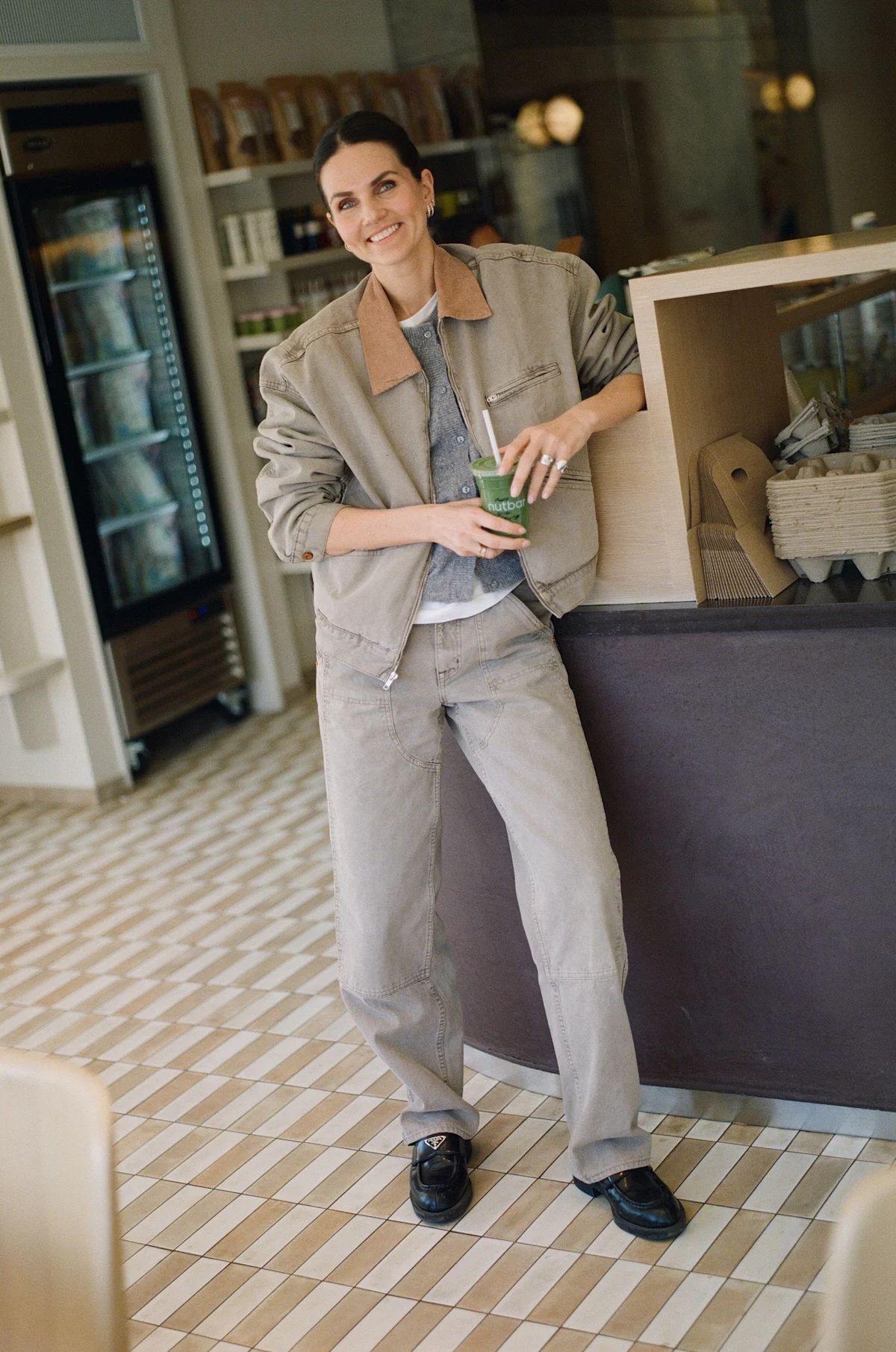
⎯⎯⎯ No, I actually have the funniest anecdote. I had the idea of running my own business, just out of school, and I remember being like, I think I could start my own business. And I'll never forget, I went to Indigo at Yonge and Bloor, and I was like, I'm going to go to the entrepreneurship section and buy a book about how to run a business. And I took out a book, and it was like, before you read any further, if you want to start a business, you need to be the type of person that grinds 24 hours a day, up at 5 in the morning and work until 3 at night, and I was like, oh, my God, that's not me. I panicked and put the book back, and was like, I'm not an entrepreneur. I love my family. I don't want to be the person who's just in a grind. That's not what life is. So it's so funny that I've come into this role. It's also really funny because my brother is the co-founder of Othership, so I don't know how both of us had ended up in this super entrepreneurial position, but when I feel strongly about something, and feel excited about it, it gives me a lot of energy to share it with other people and connect with other people, so I'm not entirely surprised, but this was definitely not the plan.
– East Room is a shared workspace company providing design-forward office solutions, authentic programming and a diverse community to established companies and enterprising freelancers. We explore art, design, music, and entrepreneurship. Visit our News & Stories page to read more.
